
For an office building, an empty suite is not only a space problem. It is a timing problem. The right tenant may be searching for an office this week, comparing locations next month or preparing for a move several months from now.
Office leasing advertising helps owners and operators reach those businesses when they are actively looking. Instead of relying only on listing sites or waiting for organic visibility to build, a focused advertising system can promote available areas by location, office type, language, and move-in timing.
The most important principle is simple: advertising should lead to a real leasing conversation. The useful outcomes are calls, inquiries, tours, proposals, and signed leases—not clicks by themselves.
Does your building need more tenant inquiries?
Get a quick recommendation for Google Ads, landing pages, Maps and lead tracking for your property.
[alo-form=1]
Bài viết có gì?
Why advertising is useful for office leasing today
Prospects can compare buildings, photos, facilities, maps, and contact details online before they speak to a leasing team. They expect quick answers to practical questions:
- Where is the building and how convenient is it for employees and visitors?
- What area and configuration are currently available?
- What is included in the rent and service charge?
- Can the team move in quickly?
- How can a private viewing be arranged?
Advertising puts those answers in front of prospects at the point of search. It is also convenient for property teams because campaigns can be launched around one building, one district, one tenant segment, or one language, then adjusted as inventory changes.
Speed matters when a suite needs attention. It should be paired with accurate information and proper measurement so fast traffic does not become wasted spend.
Google Ads should be the primary channel
Google Ads is a natural starting point because office tenants often search with specific intent. Examples include:
- office space for lease in [district];
- Grade A office in [city];
- serviced office in [location];
- office for rent near [landmark];
- office for a 20-person team;
- [building name] office for lease.
Campaigns can be separated by location, office type, property, language and brand status. English-speaking prospects should reach a complete English landing page, while local searches should receive a localized experience.
The main advantage is immediacy: a property can appear when a prospect is already searching for office space. That makes search advertising particularly useful when the aim is to generate inquiries or tours rather than only awareness.
Supporting channels and their roles
Google Ads can be the core channel, while other platforms support different parts of the decision journey.
Facebook Ads
Facebook is useful for showing the building, lobby, workspace, facilities, and new availability. It can also support remarketing to people who visited a leasing page or watched a property video but did not inquire.
TikTok Ads
Short-form video can make the workspace easier to imagine. It can be a good fit for serviced offices, coworking spaces, furnished suites, and properties that benefit from a visual tour.
LinkedIn Ads
LinkedIn may help reach founders, executives, HR leaders, office managers, administrators and market-entry teams. Because audience size and cost need to be assessed carefully, it is best used when the target segment and value proposition are specific.
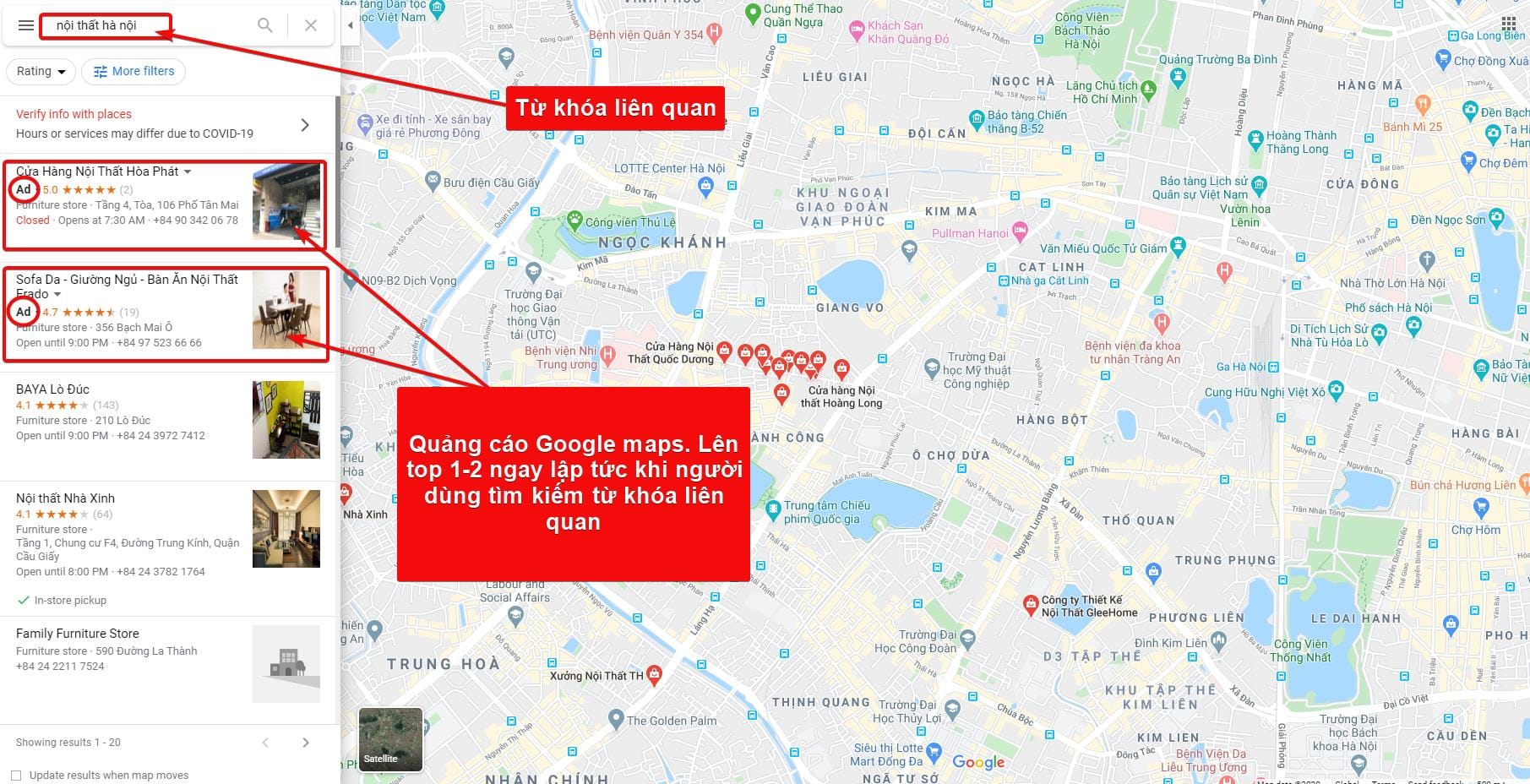
Maps Ads and Google Maps support
When prospects search for a building name, address, or nearby office, Maps can make calls, directions and location verification easier. Before using local advertising, check the Google Business Profile, verification status, address, contact details, images, and review process.
Supporting services such as Google Maps verification, profile optimization, compliant review guidance and SEO audits can remove friction from the local discovery experience. They complement paid advertising; they do not replace a well-structured search campaign.
Get an office leasing advertising recommendation
What an office leasing advertising service should cover
1. Pre-launch audit
Review the advertising account, past campaigns, search terms, website, landing page, mobile speed, inquiry form, phone tracking and sales response process. The property’s current availability and leasing terms must also be reliable.
If the page does not explain area, facilities, pricing structure or viewing options, fixing the destination may be more important than increasing the media budget.
2. Intent-based keyword planning
Group searches by location, office type, size, facilities, building name and language. Keep broad research terms separate from high-intent leasing searches so the budget and results remain understandable.
3. Campaign and message structure
Organize campaigns by the dimensions that matter to the leasing team: district, property, product, language and brand. Match each group with a relevant ad and landing page.
4. Conversion tracking
Track inquiry forms, phone calls, chats, quote requests and viewing requests. Then connect those actions to the leasing pipeline so the campaign can be assessed on lead quality.
5. Continuous optimization
Review search terms, negative keywords, locations, devices, ad messages, landing-page behavior and response speed. Allocate more budget to groups that generate qualified conversations and tours.
What the landing page should communicate
An advertising landing page should make the next step obvious. Include:
- building name, address and map;
- available areas, layouts and current photos;
- facilities, services, parking and handover timing;
- an explanation of rent, service charges, taxes and relevant costs;
- a short form for area, company details and expected move date;
- click-to-call and private-viewing options on mobile.
If pricing cannot be published, explain how the prospect will receive a tailored quote and what information the leasing team needs. A clear promise is more useful than a generic “Contact us” button.
Measure the leasing journey, not only the click
The useful sequence is:
Click → Inquiry → Qualified lead → Viewing → Proposal → Negotiation → Lease.
Monitor cost per inquiry, cost per qualified lead, call connection rate, viewing rate, response time and cost per leasing opportunity. A campaign with fewer inquiries may be more valuable if it creates better tours and proposals.
This is especially important for high-value office leases, where the decision cycle may take longer than the initial campaign reporting window.
A practical year-round operating model
Prepare
Keep property information, current availability, photos, landing pages and tracking ready. Decide which districts, areas and tenant segments deserve priority.
Launch
Start with high-intent Google Ads, then add social, LinkedIn or Maps support where the audience and property justify it.
Learn
Review search quality, lead fit, call outcomes and viewing requests. Remove irrelevant traffic and clarify weak messages.
Scale
Move budget to better-performing buildings, locations, languages and tenant segments while continuing to refresh content as availability changes.
Related LeadUp resources and services
Get an advertising plan for your building and target area
Get a quick recommendation for Google Ads, landing pages, Maps and lead tracking for your property.
[alo-form=5]
Conclusion
Office leasing advertising works best when it is direct, measurable and easy for a prospect to act on. Google Ads can capture active demand quickly; Facebook, TikTok, LinkedIn and Maps can support awareness, remarketing, decision-maker reach and local discovery.
LeadUp can support office-building businesses with account and landing-page audits, Google Ads, multi-platform advertising, Maps services and lead measurement. The starting point is a current availability list, priority locations, office types, target tenant profiles and a clear viewing or quotation process.
Frequently asked questions
Should office leasing advertising run only when space is vacant?
Not necessarily. Increase activity when a vacancy needs to be filled quickly, but maintain a baseline presence so prospects can discover the building before their move becomes urgent.
Why use Google Ads before social advertising?
Google Ads can capture people actively searching for office space by location or need. Social advertising remains useful for visual presentation, awareness and remarketing.
Does an office building need a Google Maps profile?
A verified and accurate profile helps prospects check the address, call the team and request directions. It is an important support for local discovery and Maps advertising.